
Hello! Please enjoy my Disciplinary Literacy Presentation!
Nicole Mack Disciplinary Literacy Presentation
Hello! Please enjoy my Disciplinary Literacy Presentation!
Nicole Mack Disciplinary Literacy Presentation
 Hey! It’s been a while! For my next blog post, I created a visualization around the planets and dwarf planets in our solar system. This fits in with our study of Earth and Space because we are focusing on what planets are present in our solar system. This would be a great introduction to the planets and dwarf planets and will leave the students wondering if they agree that Pluto should be a dwarf planet or a full-sized planet. The inquiry this piece will unveil will be awesome!
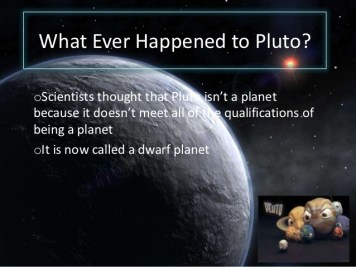
For my visualization piece, I chose to create an infographic based on the readings regarding the process and meaning behind doing them. It fits really well in science content and I really enjoyed what previous 545 students have done with theirs. I feel that science can sometimes be so deep and heavy so doing an assignment that allows students to bring in visuals will have a lot more meaning when it comes to their learning. I also thought this would work really well with my students and wanted to test out the process prior to having them use it as a choice platform for one of their projects. For the images, I spent a lot of time choosing a variety that would really show the idea behind the 8 planets and 5 dwarf planets. I focused on the idea that Pluto was downgraded and built my ideas around this. I also decided to stick to a few websites that had really good images, graphs, and charts so that it was a pretty uniform infographic. Piktochart was the website that I chose to use. Not only was the site easily accessible, but the tools and menus were very easy to use. You can find my infographic here: What Happened to the 9th Planet?
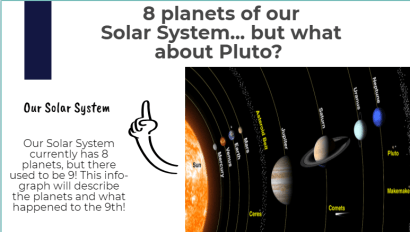
This visualization really deepened my understanding of the topic because I was able to visualize something that we cannot physically touch- space! There are many areas in science that would benefit from an infographic. It allowed me to represent everything with some sort of visual, map, or graph that enhanced each piece of information. The idea that pieces of information are very limited on the graphic also makes it easier because I had to cut down on wording to get the correct idea across. Adding videos also really helped because it takes students away from just staring at a picture.
I really enjoyed creating a visualization because it challenged me to try and use multiple sources for information, pictures, and videos. The process of creating it was not too difficult. Once I understood how Piktochart worked, I was able to move things and add things pretty easily. I really think this would be a great tool for my classroom because students can easily represent different information related to science content. It would also work really well to display different charts and graphs that we use to record information. I like how the different templates break down the ideas into categories which will make it easier for students who need more support when it comes to designing this. I have a space unit coming up in spring and I am thinking about bringing this visual in and using it as a model for some sort of project or problem based learning. With my space unit, I can have the students collaborate and work together on a mission to Mars infographic. They can find data and pictures to represent all of the recent discoveries and materials that have been created to support a mission to Mars. I definitely cannot wait to try out Infographics in my science classroom!
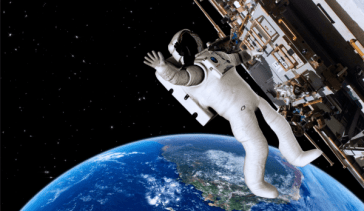
Hello! Welcome back! Hold onto your space station, this is a long post! For this post, I will be focusing on a text set for the study of earth and space exploration. This text set is focused on a middle school science classroom. The students are made up of multiple ethnicities and academic abilities. The teacher will modify, as needed, within the partner and station work.
The texts pair well together as they explore different parts of earth and space. They will begin with Earth, take dive into space, and look around our solar system. The first text is Confessions of a Planet video from youtube where students are asked discuss questions to gauge their interest. They then move into a partner NEWSLA article, “Earth, Our Constantly Changing Home.” From there, they begin to explore more about space through “Literacy Space Stations” where they participate in a teacher-guided, “close read” in a Space book. The other stations include NEWSELA articles on space exploration, NASA articles on the human body in space, and an interactive tour of the International Space Station. The literacy unit ends with a look at Pluto through a NASA article and a return to the Space book to take a look at other dwarf planets as well as the Kuiper Belt. I have listed the resources as well as how to find them! Hope you enjoy the journey through this disciplinary text set!
Multimedia
Lyrics: Confessions of a Planet lyrics
Analyzing Text Complexity: Confessions of a Planet 
Brief Summary: This text (originally) comes from a website called Flocabulary. Milwaukee Public Schools has adopted this for teacher use in our district. Flocabulary is a learning program for all grades that uses educational hip-hop music to engage students across the curriculum. Teachers can assign topics to students, such as space or motion, and the students. It has standards-based videos, instructional activities and student creativity tools to supplement instruction and develop core literacy skills. It can be used in any classroom.
Vocabulary Words: gravitational pull, revolution, inertia, elliptical, circumference, longitude, latitude, satellite, asteroid, astronomical units
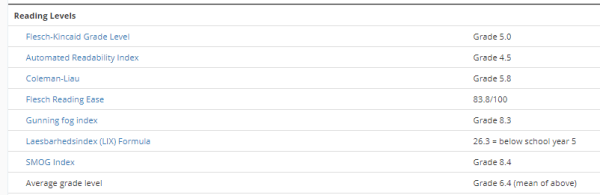
Quantitative Data: The Quantitative Data places this piece of reading at an average of 6.4 grade level. When I first viewed the video and then read the lyrics, I assumed it was a 7th grade level. The Next Gen Science Standards have their standards for middle school spanning from 6th-8th grade so the topic of solar systems may be addressed in any of those grade levels. In Milwaukee Public Schools, our students learn about Earth and the Universe and Forces and Motion (inertia) in 7th grade so that is the reason for my assumption. This would work well in any middle school classroom.
Qualitative Data: When using the Text Complexity: Qualitative Measures Rubric, I found this text to be “Very Complex” in most areas. For Text Structure, the text contains multiple pathways and exhibits discipline specific traits. For a study on space, discussing “astronomical units”, specific planets, gravitational pull, or orbits allows this text to be specific to science. The graphics present in the video support the understanding of ideas throughout the text. For example, when the video discusses the earth on its axis and the different seasons, it has a graphic of the earth spinning (with a pole through the middle) around the sun. For language features, there is language such as inertia, astronomical, or orbit that may be unfamiliar and is specific to science content. The texts purpose is to give an overall view of the content in the “solar system” lesson on Flocabualry so the video does a great job by introducing the topic through the lyrics. Finally, in looking at knowledge demands, this video assumes the students have knowledge of asteroids, orbits, and all of the other specific vocabulary words while watching. The ideas are challenging and there are allusions to outside ideas such as inertia and Sir Isaac Newton.
Task and Reader Complexity:In this text, prior knowledge would be present as students would have learned about the planets, the sun, seasons, and starts prior to middle school. They would be able to identify these concepts in the video. Previous experiences could also assist them because of the constant space exploration reference in the news currently. Students have current events every Friday, at my current school, so they will see different events surrounding space exploration. In my unit on the Earth and space, I would use this video to introduce the topic. Flocabulary has a feature where the video automatically pauses and prompts the students with a question. This would be a great way to jump into our unit. Students would be motivated because of the cultural relevance of the hip hop in the video and engaged to learn more regarding space. Using music, specifically hip hop, in any classroom allows many students to connect to the content.
When using the Reading Diversity Lite’s text complexity rubric, I found this video checked a relatively even amount of “No’s” and “Yes’s”. There are not many cultural references, but the text does “pair well with other types of texts or videos that the students encounter while at home. If students hear a hip hop song at home or on the radio, they can connect with the Flocabulary video in the way the lyricist raps the lyrics. This would also connect with student’s interest and help them build their knowledge of the content. It may even spark interest in creating their own lyrics on the topic. This video/text would engage students in their learning by bring a different, more culturally relevant, way to look at content or introduce content. I teach an urban group of 6th-8th grade students so I would use this text as a multi-use text that introduces a concept or allows students to consistently ask questions and discuss things they cannot actually see but are out there!
Print/Online Article:
NEWSELA Earth our constantly changing home
Multimedia/Interactive Visualization: 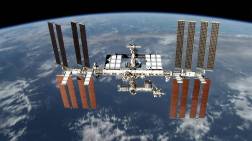
Print:
Analyzing Text Complexity: Space, by Heather Dakota 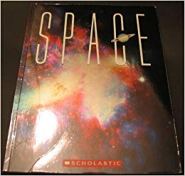
Brief Summary: This text is a book called “Space” by Heather Dakota. It is a non-fiction text that is 64 pages with a glossary on the inside, back cover. The book has many illustrations and graphics of topics in space. The book covers each planet, including dwarf planets, and different parts of our solar system.
Vocabulary Words: astronomy, astrophysics, celestial, convective zone, radiative zone, solar winds, galaxy cluster, nebula
Quantitative Data: The Quantitative Data places this piece of reading at an average of 10.2 via Story Toolz. When purchasing and previewing this book (a couple of years ago), I thought it would work well in a 7th grade classroom while studying about space. From my perspective, it would work in a middle school classroom, as a supportive text that is read together. The Story Toolz places the text at different levels but the average is at a 10th grade level, which would work if it was for an independent text.
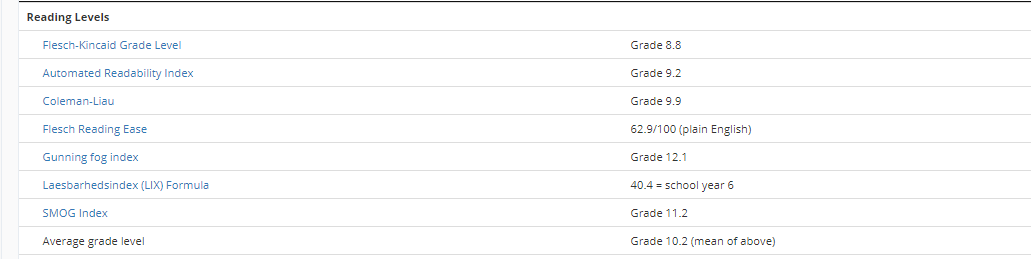
Qualitative Data: When using the Text Complexity: Qualitative Measures Rubric, I found this text to be “Very Complex.” When analyzing the text structure, the organization has connections between an extensive range of ideas surrounding space. The topics go from the sun, all the way to galaxies outside of our own. The organization is very unique and utilizes features of space to display information. There are many pictures, graphs, and charts that are vital to the overall text. The language of the text has multiple sentence structures that are complex and uses a variety of subject-specific language. The text demands that the reader have some prior knowledge of space with the ideas and discipline-specific descriptions. There are a few outside ideas and theories but most are explained fairly well. This text would do well in the hands of a 10th grader and with support for a middle school student.
Task and Reader Complexity:This book is completely focused on space, our solar system, and the many parts of it. As a student reading this, they must have some knowledge base of what space is and how we know it’s there. Students, according to the NGSS, learn about the basics of space in the intermediate levels, so this text would work well in developing those basic ideas into more elaborate knowledge in middle school. With the common interest in space and much current talk about space exploration, students would have a connection to the text and all of its contents. I would use this text, with support, in a middle school classroom. I could take a page out and do a few close-readings of it. For example, there is a section on Black Holes. This seems to be a common topic of interest among middle school students. I would use this to close read and pick out pieces that students find important so they have a better understanding of what black holes are.
According to Reading Diversity Lite’s text complexity rubric, this text checked mostly “No.” When it comes to this text being diverse or culturally relevant, there is a little evidence that it could be. This text may pair well with other texts related to space. It connects with the interest and concerns about the future of space travel that my students may have. When my students come to middle school, they have a knowledge base about space so this text can build upon what they already know. This text will engage my students with its unique graphics, pictures, and information.
Print:
Analyzing Text Complexity: All About Pluto
Brief Summary: This text comes from NASA’s website called “Space Place.” It discusses the dwarf planet, Pluto. There are facts about the planet such as: size, atmosphere, and why it isn’t one of our planets anymore.
Vocabulary Words: astronomer, dwarf planet, rotation, orbit, spacecraft, axis, Kuiper Belt, Ceres, Makemake, Eris
Quantitative Data: The Quantitative Data places this piece of reading at an average of 6.4 grade level. While previewing the text, I placed it around a late 5th grade level so the Story Toolz data is not far off. The text explains each concept very well with descriptions of unknown words and pictures to match some as well. The text is interactive for students who are at a 5th-6th grade level because it allows them to read questions and find the answers within the text, which a student at this age level could do.
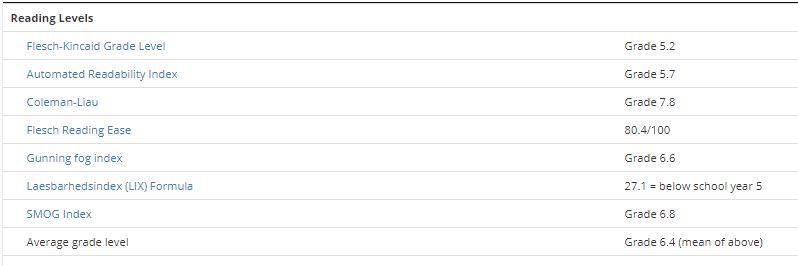
Qualitative Data: When using the Text Complexity: Qualitative Measures Rubric, I found this text to be “Moderately Complex.” It’s text structure shows text features that are used for ease of reading with different size fonts, colors, and multiple titles. The graphics enhance the reader’s understanding of the content with pictures and graphics. The language present does show some variety in terms of sentence beginnings and lengths of sentences. The sentence structures and fairly simple/compound and the vocabulary used is easily understood by a 6th grade student, with the exception of a few content specific words. These content specific words, however, are explained in the text. The text’s purpose is clear that it is to inform and expose students to details about Pluto. This text sticks to the ideas surrounding Pluto and space without many outside ideas. After looking at the text for qualitative data, I would place it at a 6th grade level.
Task and Reader Complexity:Students would have prior knowledge about space and the planets because they learn about the basics in their intermediate (3rd-5th) grade levels. This will help them to use their previous experiences and make a connection with what they are reading. I would use this text in a middle school classroom as we have a discussion about space and space exploration. Students are always curious why Pluto is not one of our planets anymore. I would possibly use this as a paired text, with other planet texts on hand to build the students content knowledge in space unit. This could be a station or group activity. Students would be motivated to read it due to the inquiry regarding space exploration and the planets/dwarf planets in our solar system.
When using Reading Diversity Lite’s text complexity rubric and checking for diversity in the text, I found that this text checked mostly “No” in regards to a diverse text. The text does not have any cultural references aside from the fact that Pluto was demoted as a planet during my students lifetime which made the news. This text will pair well with other texts and can add to the understanding of Pluto. It does connect with the interest of my students because of the thirst for more knowledge regarding space. This text would be a great addition to any unit on space.
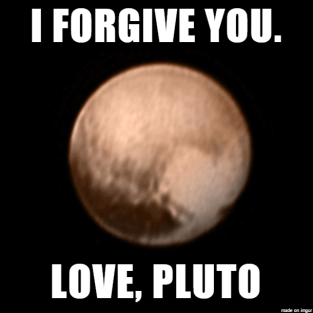 This text set is a great way to get students talking about their interests with space exploration. Literacy allows them to be exposed to different views and facts regarding space. Always allow them to ask questions as inquiry is what drives science! Good luck!
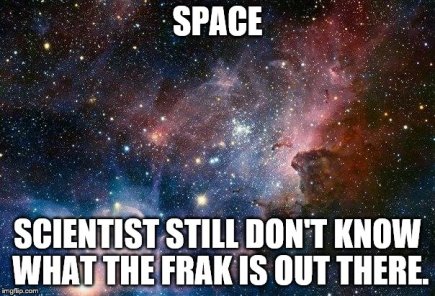 As a science educator, I teach many different topics. One of my favorite topics to teach is space. My students always seem to have a vested interest in learning about space and all the current happenings with it. I would love to learn how to incorporate more literacy into space education to enhance my students understanding and knowledge about it. The topic of space has so much information and is a science that we are learning more and more about every day. With the possibility of landing on another planet through space exploration in the next 10 years, it is so exciting! This blog will allow me to find different resources related to space education and literacy.
What do I already know about space? I know the science of celestial bodies and the formation of them. I understand the planets and their orbit around the sun. One of my favorite things to “know” is about space exploration. We will be inhabiting Mars within the next 10 years and having “floating colonies” around Venus as well. There are commercial space flights and hotels in the works. My knowledge of space is not vast (see what I did there?), but I know enough to help my students explore the topic while I teach it. One of the hardest things about teaching it is that there is so much that is unknown about space and it isn’t something you can “touch” or visit!
There are many things I still want to learn to better facilitate space lessons for my students. First, I want to focus on Earth to get a better sense of why and how we are here. This will give my students an understanding of their own backyard. Next, I want to know more about space exploration and the science behind space shuttles. How do they get there? With the current state of our planet and its resources, it is inevitable that we will need to look at other places to colonize. The planets themselves fascinate me and I know the basics of each and their placement in space, but I would like to know more. One thing I would also like to dig more into the atmosphere of each planet. How is it different from our own? When we look at Mars, for example, how is the atmosphere so vastly different from Earth’s atmosphere?
– National Aeronautics and Space Administration for the United States
https://www.publishersweekly.com/978-1-250-10808-1
-A comedic children’s book written from the Earth’s point of view that discusses the history of the earth.
-A data base of current events stories tailor-made for classroom use. Students can research current articles on space exploration.
-Sandards-based digital content for K-12 classrooms that has multimedia content related to science and other subjects. (videos, interactives, digital textbooks, audio, text, etc.)
– A free community for sharing instructional videos and content for teachers and students.
– Scholastic always has great resources for teachers and students. In this resource, students learn about the history of space exploration through reading and writing.
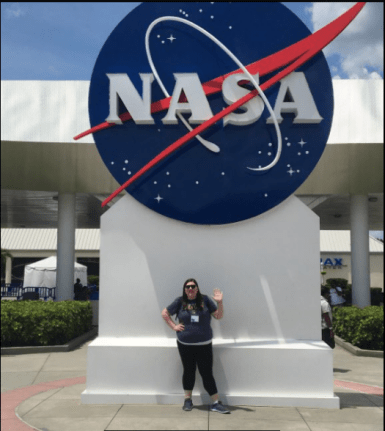
Greetings Earthlings! My name is Nicole Mack. I am currently a middle school science teacher at IDEAL school in MPS. I am in my 8th year of teaching middle school and absolutely love it! I am in graduate school at UWMilwaukee pursuing my Masters of Curriculum and Instruction in Reading with an additional Reading Specialist License and will graduate in December of 2018!
I have been in my role as a science educator for 3 years and I am beginning to absolutely love what I do! In addition to obtaining my Masters in Reading Education, I am thinking about pursuing some additional science credits or a science license. One of my future goals with my Reading Specialist license is to focus on literacy in the content areas. I am constantly challenging myself to bring more literacy into my lessons and my students lives. One way I have done that is the inclusion of the Discovery Education Techbook. The techbook uses multi-modal literacy because it asks my students to read, view videos, work on collaborative group projects, and view images that allow them to analyze their science content. The Discovery Education Techbook is a great resource for any science or STEM-focused classroom.
This past year my school was chosen to be a part of a STEM grant in MPS. With that grant, I was also chosen to be a Teacher Stem Ambassador (TSA). With this role, I am involved writing STEM-based curriculum for middle school science classrooms in MPS. This has really allowed me to improve my own teaching because I get to work with a team of great educators writing about something they love as much as I do! I look forward to improving literacy in my science classroom through grad school, being a member of the TSA team, and collaborating with fellow educators.
 Journey to Space with Mack